


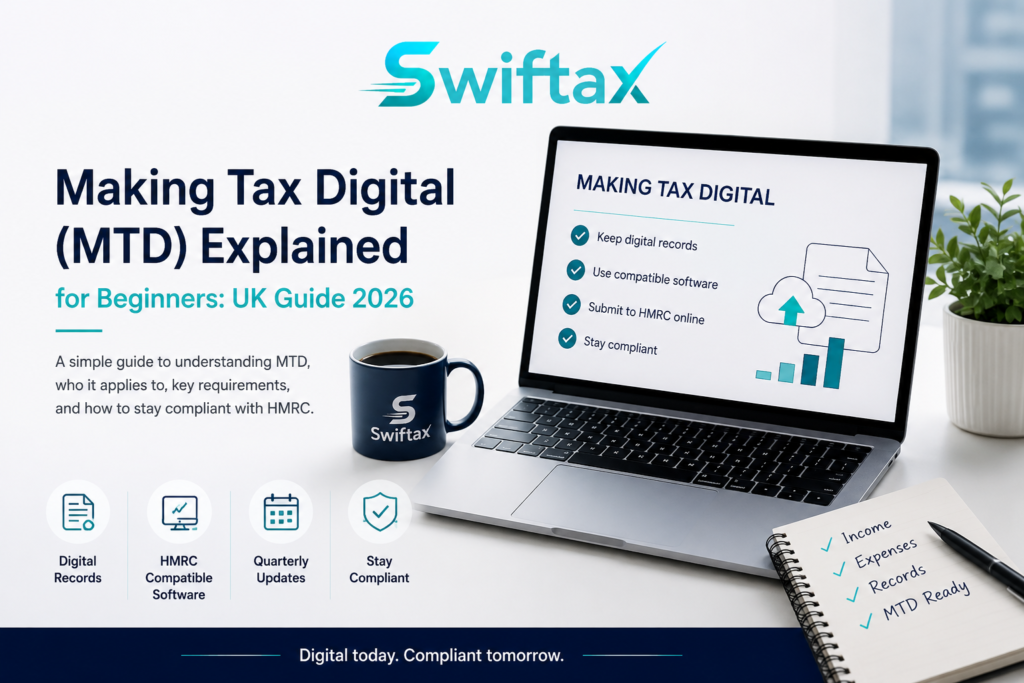
Making Tax Digital (MTD) Explained for Beginners: UK Guide 2026

Making Tax Digital (MTD) is one of the biggest changes to the way individuals and businesses manage their tax obligations in the UK.

The initiative is designed to make tax administration more efficient by requiring taxpayers to keep digital records and use compatible software to communicate with HMRC.

Whether you run a business, are self-employed, or receive rental income, understanding MTD requirements will help you prepare for upcoming changes and avoid compliance issues.

What Is Making Tax Digital (MTD)?

Making Tax Digital is a UK government initiative introduced by HM Revenue & Customs (HMRC) to move the tax system towards a fully digital approach.

Under MTD, taxpayers within scope must:

  • Keep financial records digitally.
  • Use HMRC-compatible software.
  • Submit required information electronically.

The aim is to reduce errors, improve record keeping, and make it easier for taxpayers to manage their tax obligations throughout the year.

Why Was Making Tax Digital Introduced?

HMRC introduced MTD because many tax errors occur due to:

  • Manual calculations.
  • Lost paperwork.
  • Incorrect record keeping.
  • Late preparation of accounts.

Digital records and software help businesses maintain accurate information and identify potential issues earlier.

Who Needs to Follow MTD Rules?

  1. VAT-Registered Businesses

MTD for VAT is already mandatory for most VAT-registered businesses.

Businesses must:

  • Keep VAT records digitally.
  • Use compatible software.
  • Submit VAT Returns electronically.

MTD applies regardless of turnover, although certain exemptions may apply in specific circumstances.

  1. Self-Employed Individuals and Landlords

MTD for Income Tax Self-Assessment (ITSA) is being introduced in phases.

From:

6 April 2026

Self-employed individuals and landlords with qualifying income above £50,000 will need to follow MTD for Income Tax rules.

From:

6 April 2027

The requirement will extend to those with qualifying income above £30,000.

Qualifying income generally includes income from:

  • Self-employment.
  • Property rental.

What Are the Main MTD Requirements?

Digital Record Keeping

Taxpayers within scope must maintain records digitally.

Digital records may include:

  • Sales income.
  • Business expenses.
  • Purchase information.
  • Property income and expenses.

Keeping digital records reduces manual errors and makes reporting easier.

Compatible Software

You must use software that can communicate with HMRC.

Compatible software helps you:

  • Record transactions.
  • Calculate figures.
  • Submit information electronically.
  • Maintain accurate records.

Quarterly Updates

For MTD for Income Tax, taxpayers will need to send quarterly updates to HMRC.

These updates provide HMRC with information about income and expenses during the year.

Taxpayers will also need to complete additional year-end submissions, including:

  • End of Period Statement (EOPS).
  • Final Declaration.

MTD for VAT vs MTD for Income Tax

MTD Area

Applies To

Main Requirement

MTD for VAT

VAT-registered businesses

Digital VAT records and VAT Return submissions

MTD for Income Tax

Self-employed individuals and landlords meeting thresholds

Digital records, quarterly updates and year-end declaration

What Happens If You Do Not Follow MTD Rules?

Failure to comply with MTD requirements may result in penalties.

Possible issues include:

  • Late submission penalties.
  • Incorrect record keeping.
  • HMRC compliance action.

Using suitable software and keeping records updated can help reduce the risk of errors.

How Swiftax Helps With Making Tax Digital

Swiftax is designed to make digital tax compliance simpler for individuals and businesses.

With Swiftax, you can:

  • Maintain digital financial records.
  • Track income and expenses.
  • Prepare tax information throughout the year.
  • Submit compatible tax filings.
  • Manage your tax obligations from one platform.

Swiftax helps you move away from time-consuming and frustrating paperwork by bringing your tax information into one easy-to-use online system.

Frequently Asked Questions

Is Making Tax Digital mandatory?

Yes, MTD is mandatory for taxpayers who fall within HMRC’s requirements. The rules depend on the type of tax obligation and income level.

Do I need MTD if I am self-employed?

You may need to comply with MTD for Income Tax if your qualifying self-employment income exceeds the applicable threshold.

Do landlords need Making Tax Digital?

Yes, landlords may need to follow MTD for Income Tax rules if their qualifying property income exceeds the required threshold.

Can I use spreadsheets for MTD?

Spreadsheets may be used in some circumstances if they are digitally linked to compatible software. Manual standalone spreadsheets may not meet MTD requirements.

Prepare for Making Tax Digital with Swiftax

MTD represents a major shift towards digital tax management in the UK.

Preparing early helps you maintain accurate records, understand your tax position, and avoid last-minute compliance issues.

With Swiftax, you can manage your tax information digitally and prepare for the future of UK tax reporting.

Start using Swiftax today.

No subscription. Pay only when you submit.

Disclaimer: This article provides general information only and does not constitute tax, accounting, financial, or legal advice. Tax rules and regulations may change, and the application of any information depends on your individual circumstances. Always seek advice from a qualified professional or refer to official guidance before making decisions.

Leave a Reply

Your email address will not be published. Required fields are marked *

Making Tax Digital (MTD) Explained for Beginners: UK Guide 2026

Making Tax Digital (MTD) is one of the biggest changes to the way individuals and businesses manage their tax obligations in the UK.

The initiative is designed to make tax administration more efficient by requiring taxpayers to keep digital records and use compatible software to communicate with HMRC.

Whether you run a business, are self-employed, or receive rental income, understanding MTD requirements will help you prepare for upcoming changes and avoid compliance issues.

What Is Making Tax Digital (MTD)?

Making Tax Digital is a UK government initiative introduced by HM Revenue & Customs (HMRC) to move the tax system towards a fully digital approach.

Under MTD, taxpayers within scope must:

  • Keep financial records digitally.
  • Use HMRC-compatible software.
  • Submit required information electronically.

The aim is to reduce errors, improve record keeping, and make it easier for taxpayers to manage their tax obligations throughout the year.

Why Was Making Tax Digital Introduced?

HMRC introduced MTD because many tax errors occur due to:

  • Manual calculations.
  • Lost paperwork.
  • Incorrect record keeping.
  • Late preparation of accounts.

Digital records and software help businesses maintain accurate information and identify potential issues earlier.

Who Needs to Follow MTD Rules?

  1. VAT-Registered Businesses

MTD for VAT is already mandatory for most VAT-registered businesses.

Businesses must:

  • Keep VAT records digitally.
  • Use compatible software.
  • Submit VAT Returns electronically.

MTD applies regardless of turnover, although certain exemptions may apply in specific circumstances.

  1. Self-Employed Individuals and Landlords

MTD for Income Tax Self-Assessment (ITSA) is being introduced in phases.

From:

6 April 2026

Self-employed individuals and landlords with qualifying income above £50,000 will need to follow MTD for Income Tax rules.

From:

6 April 2027

The requirement will extend to those with qualifying income above £30,000.

Qualifying income generally includes income from:

  • Self-employment.
  • Property rental.

What Are the Main MTD Requirements?

Digital Record Keeping

Taxpayers within scope must maintain records digitally.

Digital records may include:

  • Sales income.
  • Business expenses.
  • Purchase information.
  • Property income and expenses.

Keeping digital records reduces manual errors and makes reporting easier.

Compatible Software

You must use software that can communicate with HMRC.

Compatible software helps you:

  • Record transactions.
  • Calculate figures.
  • Submit information electronically.
  • Maintain accurate records.

Quarterly Updates

For MTD for Income Tax, taxpayers will need to send quarterly updates to HMRC.

These updates provide HMRC with information about income and expenses during the year.

Taxpayers will also need to complete additional year-end submissions, including:

  • End of Period Statement (EOPS).
  • Final Declaration.

MTD for VAT vs MTD for Income Tax

MTD Area

Applies To

Main Requirement

MTD for VAT

VAT-registered businesses

Digital VAT records and VAT Return submissions

MTD for Income Tax

Self-employed individuals and landlords meeting thresholds

Digital records, quarterly updates and year-end declaration

What Happens If You Do Not Follow MTD Rules?

Failure to comply with MTD requirements may result in penalties.

Possible issues include:

  • Late submission penalties.
  • Incorrect record keeping.
  • HMRC compliance action.

Using suitable software and keeping records updated can help reduce the risk of errors.

How Swiftax Helps With Making Tax Digital

Swiftax is designed to make digital tax compliance simpler for individuals and businesses.

With Swiftax, you can:

  • Maintain digital financial records.
  • Track income and expenses.
  • Prepare tax information throughout the year.
  • Submit compatible tax filings.
  • Manage your tax obligations from one platform.

Swiftax helps you move away from time-consuming and frustrating paperwork by bringing your tax information into one easy-to-use online system.

Frequently Asked Questions

Is Making Tax Digital mandatory?

Yes, MTD is mandatory for taxpayers who fall within HMRC’s requirements. The rules depend on the type of tax obligation and income level.

Do I need MTD if I am self-employed?

You may need to comply with MTD for Income Tax if your qualifying self-employment income exceeds the applicable threshold.

Do landlords need Making Tax Digital?

Yes, landlords may need to follow MTD for Income Tax rules if their qualifying property income exceeds the required threshold.

Can I use spreadsheets for MTD?

Spreadsheets may be used in some circumstances if they are digitally linked to compatible software. Manual standalone spreadsheets may not meet MTD requirements.

Prepare for Making Tax Digital with Swiftax

MTD represents a major shift towards digital tax management in the UK.

Preparing early helps you maintain accurate records, understand your tax position, and avoid last-minute compliance issues.

With Swiftax, you can manage your tax information digitally and prepare for the future of UK tax reporting.

Start using Swiftax today.

No subscription. Pay only when you submit.

Disclaimer: This article provides general information only and does not constitute tax, accounting, financial, or legal advice. Tax rules and regulations may change, and the application of any information depends on your individual circumstances. Always seek advice from a qualified professional or refer to official guidance before making decisions.

Leave a Reply

Your email address will not be published. Required fields are marked *

Swiftax Ltd (Company No. 15695200) provides secure cloud-based tax and bridging software for individuals, businesses and agents. Our platform simplifies UK tax returns, VAT submissions, invoicing and accounting with reliable tools to help you manage your finances efficiently.
Swiftax Ltd is registered with the UK Information Commissioner’s Office (ICO) under Registration Reference ZC196224.