


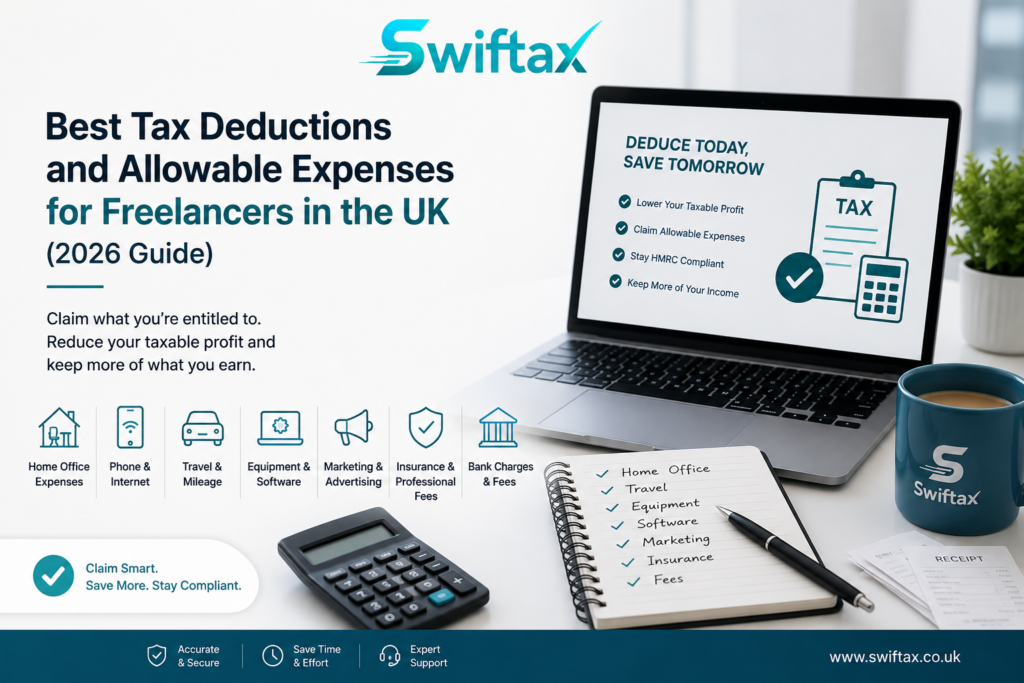
Best Tax Deductions and Allowable Expenses for Freelancers in the UK (2026 Guide)

Being self-employed or working as a freelancer means you are responsible for reporting your income and paying tax on your profits.

One of the best ways to reduce your tax bill legally is to claim all allowable business expenses you are entitled to.

Allowable expenses reduce your taxable profit, meaning you only pay tax on the income that remains after eligible business costs have been deducted.

This guide explains the most common expenses freelancers can claim in the UK and the mistakes to avoid.

What Are Allowable Expenses?

Allowable expenses are costs that are incurred wholly and exclusively for the purpose of running your business.

If an expense is partly personal and partly business-related, normally only the business portion can be claimed.

For example:

  • A laptop used entirely for work may be fully allowable.
  • A mobile phone used for both personal and business use may only allow the business proportion.

Keeping accurate records throughout the year helps ensure you claim correctly.

Common Allowable Expenses for Freelancers

  1. Home Office Expenses

Many freelancers work from home and may be able to claim costs associated with running their business.

You can usually choose between:

Simplified Expenses

A flat-rate method based on the number of hours you work from home.

Actual Costs

A proportion of household expenses, such as:

  • Electricity
  • Gas
  • Heating
  • Internet costs
  • Council Tax

The amount claimed should reflect business use only.

  1. Phone and Internet Costs

Business-related communication costs may be allowable.

Examples include:

  • Business phone contracts
  • Internet services used for work
  • Mobile data costs

If a service is used personally as well, only the business element should normally be claimed.

  1. Travel and Mileage Expenses

Freelancers can often claim business travel costs.

Examples include:

  • Public transport fares
  • Business mileage
  • Parking costs incurred for business reasons
  • Accommodation for business trips

However, normal journeys between your home and a permanent workplace are generally treated as commuting and are not usually allowable.

  1. Equipment and Software

Many freelancers rely on digital tools and equipment to operate their businesses.

Potentially allowable costs include:

  • Computers and laptops
  • Printers
  • Business equipment
  • Accounting software
  • Design software
  • Cloud storage subscriptions
  • Online tools used for work

Some larger equipment purchases may be treated differently for tax purposes and could qualify for capital allowances.

  1. Marketing and Advertising Costs

Promoting your freelance business is an important investment.

Allowable marketing expenses may include:

  • Website costs
  • Domain registration
  • Online advertising
  • Social media advertising
  • Graphic design services
  • Business stationery
  1. Professional Fees and Insurance

You may be able to claim costs such as:

  • Accountant fees
  • Tax adviser fees
  • Business insurance
  • Professional indemnity insurance
  • Legal fees related to your business
  1. Bank Charges and Payment Fees

If you use financial services for your business, you may be able to claim:

  • Business bank charges
  • Payment processing fees
  • Transaction fees

Common Tax Mistakes Freelancers Make

Not Tracking Expenses throughout the Year

Many freelancers lose money by failing to record small but legitimate business costs.

Keeping records regularly makes tax filing easier and reduces the chance of missing allowable expenses.

Claiming Personal Expenses

A common mistake is claiming costs that are not related to business activities.

Examples include:

  • Personal shopping
  • Private travel
  • Personal subscriptions

Missing Mileage Claims

Freelancers who travel for business often forget to record mileage.

Keep a record of:

  • Date of journey
  • Destination
  • Business purpose
  • Miles travelled

Not Keeping Receipts and Records

HMRC requires taxpayers to keep sufficient records to support their tax return.

Good record keeping helps you:

  • Complete your return accurately.
  • Support expense claims.
  • Respond to HMRC questions.

How Swiftax Helps Freelancers Manage Tax?

Keeping track of income and expenses throughout the year makes Self-Assessment much easier.

Swiftax helps freelancers:

  • Organise income and expense information.
  • Prepare tax returns.
  • Reduce manual calculations.
  • Manage records digitally.
  • File online when ready.

Prepare your Self-Assessment return without a monthly subscription.

Pay only when you submit.

Frequently Asked Questions

Can freelancers claim expenses against tax?

Yes. Freelancers can generally claim allowable business expenses that are incurred wholly and exclusively for business purposes.

Can I claim my laptop as a freelancer expense?

A laptop used for business purposes may be claimable, although the tax treatment can depend on the circumstances and cost.

Can freelancers claim home working expenses?

Yes. Freelancers working from home may be able to claim simplified expenses or a reasonable proportion of household costs.

Can I claim mileage as a freelancer?

Yes, business mileage may be claimable when using your own vehicle, provided the journey is for business purposes.

Reduce Your Taxable Profit the Right Way

Claiming legitimate business expenses helps freelancers pay the correct amount of tax while keeping more of their hard-earned income.

The key is accurate record keeping, understanding what qualifies as an allowable expense, and preparing your Self-Assessment return correctly.

Start your Self-Assessment with Swiftax today.

No subscription. Pay only when you submit.

Disclaimer: This article provides general information only and does not constitute tax, accounting, financial, or legal advice. Tax rules and regulations may change, and the application of any information depends on your individual circumstances. Always seek advice from a qualified professional or refer to official guidance before making decisions.

Leave a Reply

Your email address will not be published. Required fields are marked *

Best Tax Deductions and Allowable Expenses for Freelancers in the UK (2026 Guide)

Being self-employed or working as a freelancer means you are responsible for reporting your income and paying tax on your profits.

One of the best ways to reduce your tax bill legally is to claim all allowable business expenses you are entitled to.

Allowable expenses reduce your taxable profit, meaning you only pay tax on the income that remains after eligible business costs have been deducted.

This guide explains the most common expenses freelancers can claim in the UK and the mistakes to avoid.

What Are Allowable Expenses?

Allowable expenses are costs that are incurred wholly and exclusively for the purpose of running your business.

If an expense is partly personal and partly business-related, normally only the business portion can be claimed.

For example:

  • A laptop used entirely for work may be fully allowable.
  • A mobile phone used for both personal and business use may only allow the business proportion.

Keeping accurate records throughout the year helps ensure you claim correctly.

Common Allowable Expenses for Freelancers

  1. Home Office Expenses

Many freelancers work from home and may be able to claim costs associated with running their business.

You can usually choose between:

Simplified Expenses

A flat-rate method based on the number of hours you work from home.

Actual Costs

A proportion of household expenses, such as:

  • Electricity
  • Gas
  • Heating
  • Internet costs
  • Council Tax

The amount claimed should reflect business use only.

  1. Phone and Internet Costs

Business-related communication costs may be allowable.

Examples include:

  • Business phone contracts
  • Internet services used for work
  • Mobile data costs

If a service is used personally as well, only the business element should normally be claimed.

  1. Travel and Mileage Expenses

Freelancers can often claim business travel costs.

Examples include:

  • Public transport fares
  • Business mileage
  • Parking costs incurred for business reasons
  • Accommodation for business trips

However, normal journeys between your home and a permanent workplace are generally treated as commuting and are not usually allowable.

  1. Equipment and Software

Many freelancers rely on digital tools and equipment to operate their businesses.

Potentially allowable costs include:

  • Computers and laptops
  • Printers
  • Business equipment
  • Accounting software
  • Design software
  • Cloud storage subscriptions
  • Online tools used for work

Some larger equipment purchases may be treated differently for tax purposes and could qualify for capital allowances.

  1. Marketing and Advertising Costs

Promoting your freelance business is an important investment.

Allowable marketing expenses may include:

  • Website costs
  • Domain registration
  • Online advertising
  • Social media advertising
  • Graphic design services
  • Business stationery
  1. Professional Fees and Insurance

You may be able to claim costs such as:

  • Accountant fees
  • Tax adviser fees
  • Business insurance
  • Professional indemnity insurance
  • Legal fees related to your business
  1. Bank Charges and Payment Fees

If you use financial services for your business, you may be able to claim:

  • Business bank charges
  • Payment processing fees
  • Transaction fees

Common Tax Mistakes Freelancers Make

Not Tracking Expenses throughout the Year

Many freelancers lose money by failing to record small but legitimate business costs.

Keeping records regularly makes tax filing easier and reduces the chance of missing allowable expenses.

Claiming Personal Expenses

A common mistake is claiming costs that are not related to business activities.

Examples include:

  • Personal shopping
  • Private travel
  • Personal subscriptions

Missing Mileage Claims

Freelancers who travel for business often forget to record mileage.

Keep a record of:

  • Date of journey
  • Destination
  • Business purpose
  • Miles travelled

Not Keeping Receipts and Records

HMRC requires taxpayers to keep sufficient records to support their tax return.

Good record keeping helps you:

  • Complete your return accurately.
  • Support expense claims.
  • Respond to HMRC questions.

How Swiftax Helps Freelancers Manage Tax?

Keeping track of income and expenses throughout the year makes Self-Assessment much easier.

Swiftax helps freelancers:

  • Organise income and expense information.
  • Prepare tax returns.
  • Reduce manual calculations.
  • Manage records digitally.
  • File online when ready.

Prepare your Self-Assessment return without a monthly subscription.

Pay only when you submit.

Frequently Asked Questions

Can freelancers claim expenses against tax?

Yes. Freelancers can generally claim allowable business expenses that are incurred wholly and exclusively for business purposes.

Can I claim my laptop as a freelancer expense?

A laptop used for business purposes may be claimable, although the tax treatment can depend on the circumstances and cost.

Can freelancers claim home working expenses?

Yes. Freelancers working from home may be able to claim simplified expenses or a reasonable proportion of household costs.

Can I claim mileage as a freelancer?

Yes, business mileage may be claimable when using your own vehicle, provided the journey is for business purposes.

Reduce Your Taxable Profit the Right Way

Claiming legitimate business expenses helps freelancers pay the correct amount of tax while keeping more of their hard-earned income.

The key is accurate record keeping, understanding what qualifies as an allowable expense, and preparing your Self-Assessment return correctly.

Start your Self-Assessment with Swiftax today.

No subscription. Pay only when you submit.

Disclaimer: This article provides general information only and does not constitute tax, accounting, financial, or legal advice. Tax rules and regulations may change, and the application of any information depends on your individual circumstances. Always seek advice from a qualified professional or refer to official guidance before making decisions.

Leave a Reply

Your email address will not be published. Required fields are marked *

Swiftax Ltd (Company No. 15695200) provides secure cloud-based tax and bridging software for individuals, businesses and agents. Our platform simplifies UK tax returns, VAT submissions, invoicing and accounting with reliable tools to help you manage your finances efficiently.
Swiftax Ltd is registered with the UK Information Commissioner’s Office (ICO) under Registration Reference ZC196224.